When to Trek Nepal: A Seasonal Guide That Actually Helps
The honest answer to the most common question we get

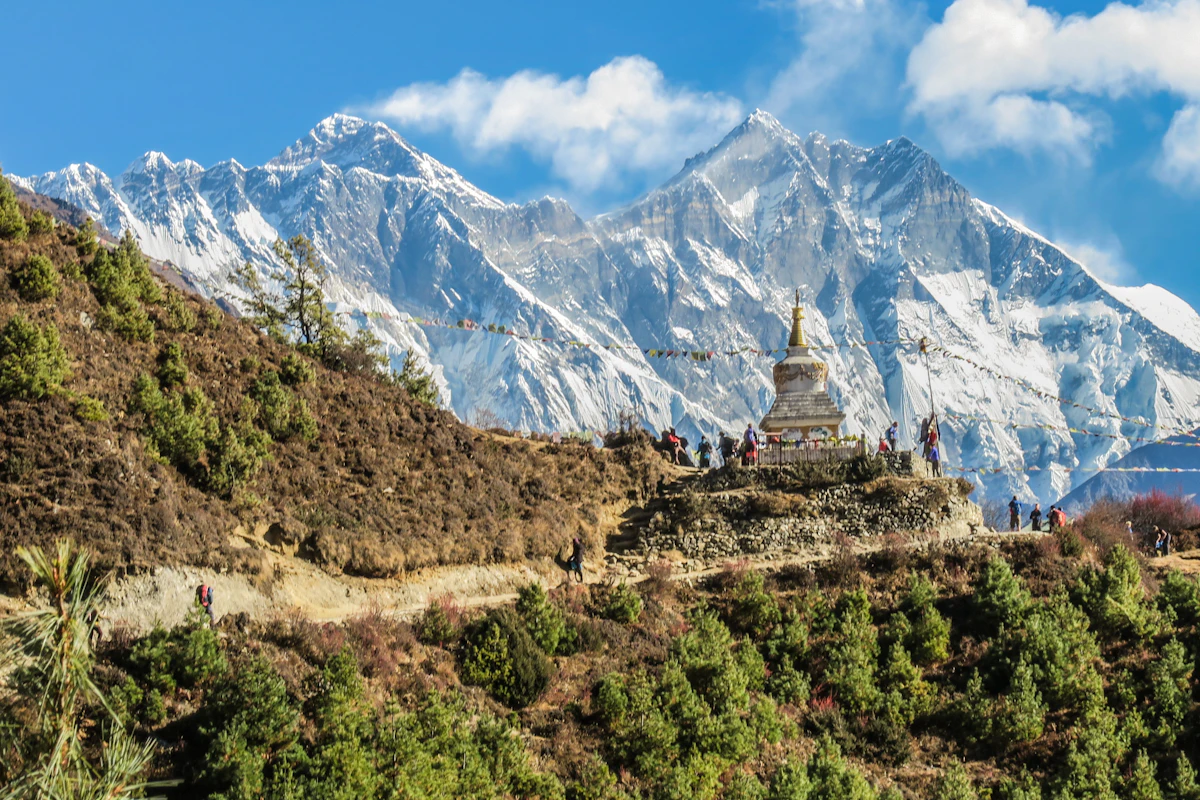
Above the Khumbu Valley, Nepal. TrekTrove Himalaya expedition.
The most common question we receive from prospective trekkers is: when should I go? The honest answer is that it depends what you want to feel. Every season in Nepal offers something the others do not. The question is which trade-offs you are willing to make.
October and November: the classic season
This is Nepal's most popular trekking window for a reason. The monsoon has cleared by late September, leaving the air washed clean and the visibility at its absolute best. The peaks are sharp against impossibly blue skies. The trails are dry, the days warm, the nights cold but manageable.
October is the busiest month on the major routes. Everest Base Camp and the Annapurna Circuit fill with trekkers in a way that can feel, at its peak, like a procession rather than an expedition. If you are trekking for solitude, avoid the last two weeks of October.
November is our preferred month for the classic routes. The crowds thin, the temperatures drop slightly, and the quality of light in November's long Himalayan afternoons is unlike any other month. The clarity has a crispness that October, warmer and more humid, does not quite match.
March and April: the spring window
Spring trekking is underrated by most visitors outside Nepal. The rhododendron forests between 2,500 and 4,000 metres bloom in March and April — a palette of crimson, pink, and white against snow-dusted ridgelines that rivals anything the autumn offers.
April is expedition season on Everest. If timing aligns, the approach to Base Camp in April puts you in the company of summit teams: fixed-rope teams, high-altitude porters, the organised intensity of an eight-thousander expedition. For many trekkers, this context adds a dimension that the post-monsoon season does not provide.
The downsides of spring: the visibility, while good, rarely matches October-November. The air retains some pre-monsoon haze by late April. Temperatures at altitude are warmer than autumn equivalents, which some trekkers prefer and others find less dramatic.
The monsoon: June to September
We do not recommend the major Himalayan routes in monsoon season for most trekkers. The trails become muddy and often dangerous, the peaks are invisible behind cloud for days at a time, and leeches on the lower trails are a genuine inconvenience.
However — and this requires emphasis — the monsoon opens certain routes that are inaccessible or significantly less interesting in other seasons. Upper Mustang, in Nepal's rain shadow north of the Annapurna massif, is one of the finest trekking destinations in the world during monsoon months precisely because it receives almost no rainfall. The Dolpo region follows the same logic.
If your window falls between June and September, do not write off Nepal. Reroute to the rain shadow regions. The cultural density of the Mustang valley — its gompas, its walled city at Lo Manthang, its cliff caves — is best experienced in the clear, dry conditions of the monsoon months when southern Nepal is underwater.
Winter: December to February
Winter trekking in Nepal's middle elevations — the Langtang Valley, the lower Annapurna foothills, the Kathmandu Valley rim treks — is perfectly feasible and offers the gift of almost empty trails. The major high-altitude routes (EBC, Annapurna Circuit over Thorong La, Manaslu Circuit) become significantly more challenging: the cold is severe, some teahouses close, and the high passes carry meaningful snow and ice risk.
For experienced winter trekkers with appropriate equipment and fitness, January and February on these routes offer a quality of solitude that no other season can match. We have run small private EBC departures in February — eight hours above 5,000m with six people on the entire trail. For the right clients, this is the correct version.
Our practical recommendation
For first-time trekkers: October or November, specifically the first two weeks of November on the EBC route and any point in October for Annapurna.
For trekkers who have done the classic routes: April for the rhododendrons and expedition season atmosphere, or monsoon season to Upper Mustang.
For private groups wanting solitude at any cost: late November through December on the mid-altitude routes, or February on EBC with a fully equipped cold-weather itinerary.
For those with total flexibility: the second week of November, any year, any major route. We will stake our reputation on this recommendation.
Aarav Thapa
Operations Director
Aarav Thapa has guided trekking expeditions in the Himalayas for over a decade. They specialize in Planning routes and high-altitude cultural experiences.