Annapurna Circuit: What It Actually Feels Like
A first-person account of 16 days in the world's greatest mountain circuit

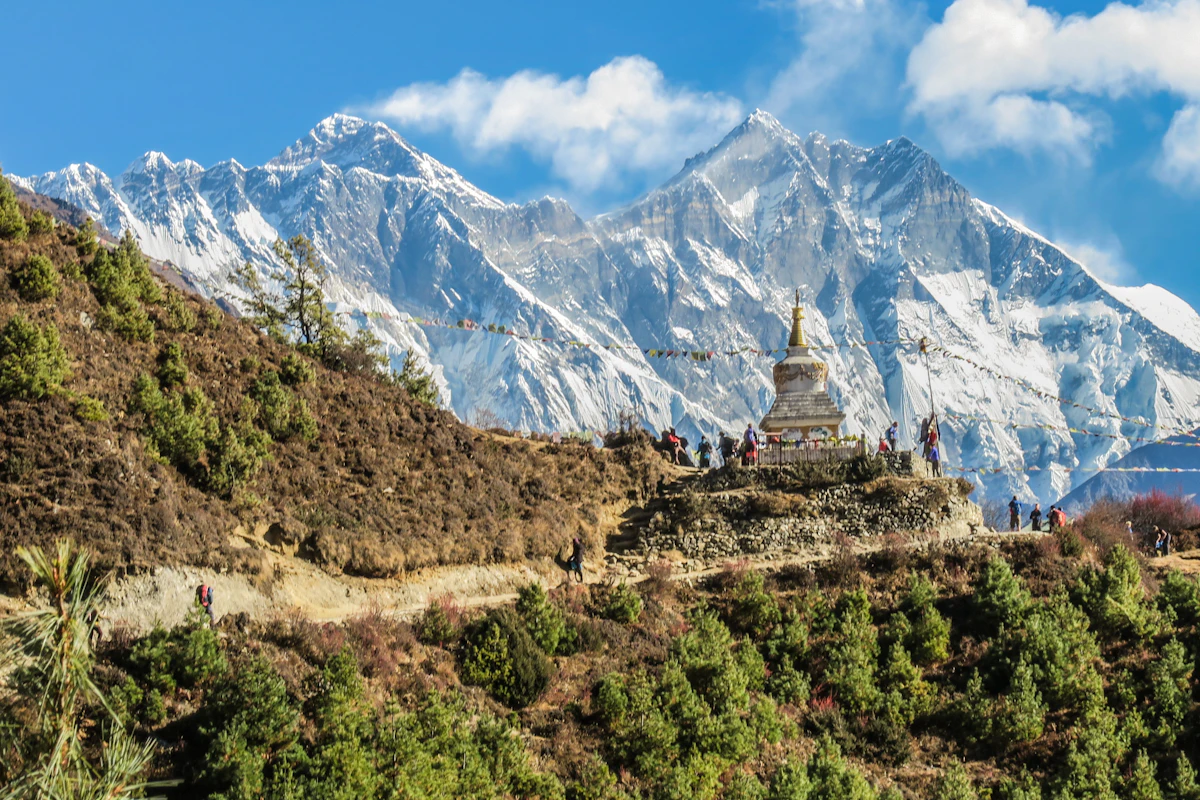
Above the Khumbu Valley, Nepal. TrekTrove Himalaya expedition.
On day eight of the Annapurna Circuit, somewhere between Manang and the Thorong La high camp, I stopped thinking about the destination entirely. The walk itself had become the only thing.
This is what the Annapurna Circuit does to you if you give it enough time. It is 160 to 230 kilometres depending on which variants you take, crossing the Thorong La Pass at 5,416 metres — the highest regularly trekked pass in the world. But to reduce it to those numbers is to entirely miss the point.
The first three days: nothing like you expect
The circuit begins in the subtropical lowlands of the Marshyangdi River valley. The air is warm, the trail wide, the villages unhurried. The first morning out of Besisahar, you walk through terraced rice fields and past women carrying enormous loads on hemp-woven namlos strapped across their foreheads. This is not the Himalayas of magazines yet. It is Nepal as it actually functions.
Most trekkers in a hurry take a jeep to Chame or Pisang, cutting three days from the walk. This is a mistake we gently discourage. Those three days teach you something about pace that becomes essential at altitude. The body learns slowly. Let it.
Manang: where the circuit earns its reputation
At 3,519 metres, Manang is the last significant village before the pass. It sits in a high valley ringed by peaks — Gangapurna, Annapurna III, Tilicho — and on a clear day the light in late afternoon turns the surrounding ice faces from white to amber to rose in the space of twenty minutes.
The acclimatisation day in Manang is mandatory on our itinerary. Most trekkers use it to hike to the Gangapurna viewpoint or the Milarepa Cave. We use it differently. Our guides take small groups to 4,200m and back — the altitude is the workout, not the destination. By evening, appetites return and sleep comes more easily. The body is catching up.
The night before the pass
Thorong Phedi high camp sits at 4,850 metres in a narrow valley that funnels wind from the pass above. Most trekkers sleep here the night before crossing. Sleep is poor — not dangerously so, just fitful and strange, the altitude making itself known in the quality of rest. Pre-dawn starts for the pass crossing are around 3:00 to 4:00 AM. The reason is practical: winds on the pass escalate dramatically through the morning, making the crossing increasingly difficult after 10 AM.
At 4 AM, in darkness broken only by headtorch beams and a frozen half-moon, the trail up to Thorong La is one of the stranger experiences the circuit offers. A hundred people climbing in silence, each absorbed entirely in their own breathing, their own next step.
The pass
Thorong La at dawn. This is what people mean when they talk about the Annapurna Circuit. The prayer flags stretch across the pass in hundreds, each one faded and frayed by wind that has crossed these mountains since long before the flags were hung. To the west, the Mustang plateau drops away in a series of ochre cliffs and dry valleys. Behind you, the Annapurna range fills the entire eastern horizon.
The descent to Muktinath is 1,700 vertical metres over eight kilometres. Knees absorb it. Trekking poles help significantly here — the trail is steep, loose, and relentless. But it ends at Muktinath's ancient temple complex at 3,760 metres, where both Hindus and Buddhists have been making pilgrimage for centuries. The temple's 108 water spouts, fed by a natural spring, run through the year regardless of season. On a morning after the pass crossing, the water is cold enough to be shocking, and the shock is exactly what the body needs.
The Mustang section
The circuit's western leg — through Kagbeni, Marpha, and Tukuche — is the section least discussed and most distinctive. The landscape shifts from alpine to semi-arid, almost Tibetan in character. Apple orchards replace rhododendrons. Mud-walled villages the colour of the earth they are built from. The light is different — drier, sharper, without the humidity that softens the eastern valleys.
Marpha's apple brandy is non-negotiable. One glass, in the late afternoon, with the Dhaulagiri massif as backdrop. This is the appropriate end to a day on the circuit.
What the circuit teaches
Sixteen days of walking, if you let them, reorganises something in how you process time. The day's success is measured entirely in whether you moved well and ate well and slept adequately. The goals that preoccupied you before departure recede not because they stop mattering but because the immediacy of the walk makes them small by comparison.
The Annapurna Circuit is available to trekkers of moderate fitness. It rewards patience above all else. The pass is challenging but never technical — it requires will and preparation, not mountaineering skill. What it does require is time. Enough of it to let the circuit work on you rather than rushing to complete it.
Priya Maharjan
Expedition Designer
Priya Maharjan has guided trekking expeditions in the Himalayas for over a decade. They specialize in Annapurna routes and high-altitude cultural experiences.