Upper Mustang: The Hidden Kingdom of the Himalayas
Nepal's most restricted region is also its most extraordinary

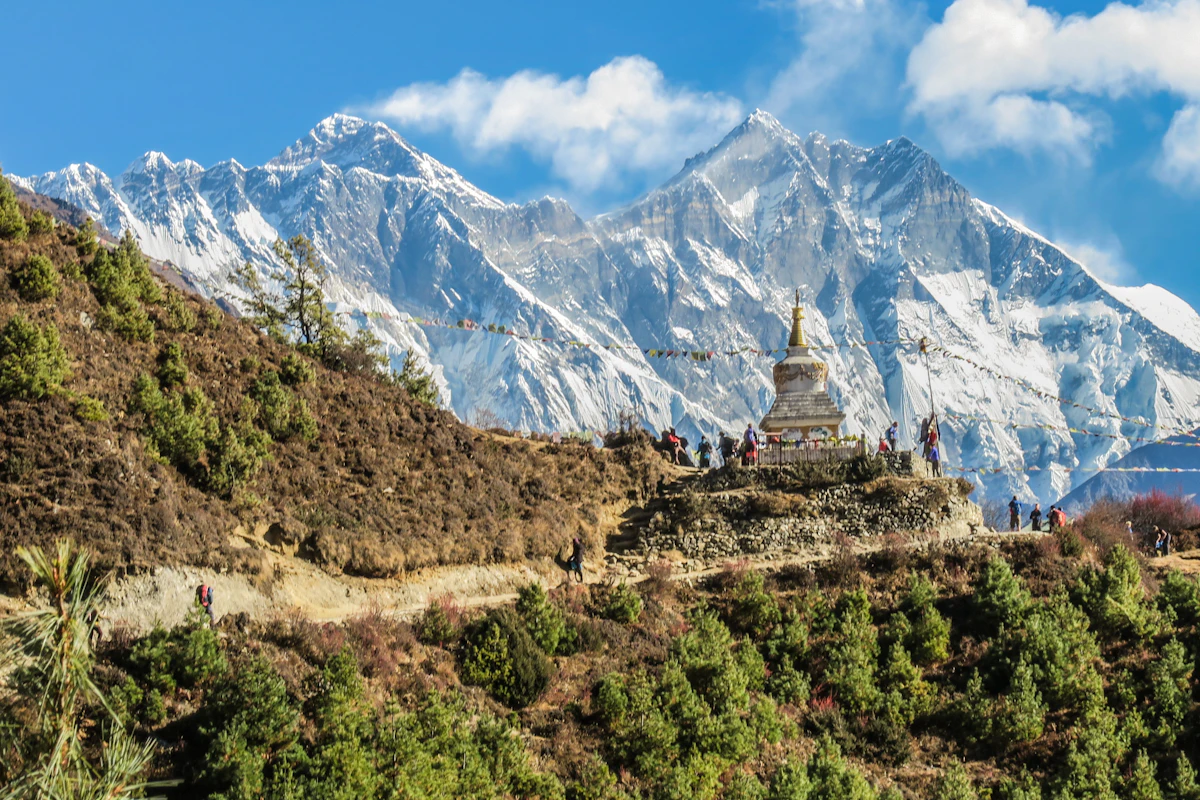
Above the Khumbu Valley, Nepal. TrekTrove Himalaya expedition.
Upper Mustang was closed to foreign visitors until 1992. The kingdom of Lo — a sovereign state within Nepal, ruled by its own king until 2008 — kept itself hidden for decades. What it preserved in that time is irreplaceable.
The permit costs USD 500 per person for the first ten days, and USD 50 per day thereafter. It is the most expensive trekking permit in Nepal by a significant margin. It is, without qualification, the most justified.
The geography of elsewhere
To understand what Mustang looks and feels like, you need to erase the standard Himalayan image from your mind. There are no glaciers here, no rhododendron forests, no green valleys. Upper Mustang is a high-altitude desert — an extension of the Tibetan plateau that sits in the rain shadow of the Annapurna and Dhaulagiri massifs. The landscape is ochre, burgundy, and grey: eroded cliffs carved by wind into layered terraces, carved further by ancient human hands into cave dwellings, gompas, and meditation retreats that predate recorded Nepali history.
The Kali Gandaki river cuts through the valley — the world's deepest gorge, by some measurements, between the faces of Annapurna and Dhaulagiri. In Mustang, it is not the gorge but the plateau that dominates. The scale is horizontal rather than vertical. The sky here is enormous.
Kagbeni: the gateway
Most Mustang itineraries enter via Jomsom and then Kagbeni, a medieval walled village at the confluence of the Kali Gandaki and the Khong Khola rivers. Kagbeni marks the formal boundary of the restricted zone — a red-painted checkpoint where permits are verified. The village's gompa, with its preserved statues and thangkas, gives an early indication of what the upper region contains.
From Kagbeni, the trail follows the river north through a landscape that shifts almost hourly. Mud walls the colour of dried blood. Ancient irrigation channels carved through rock. Mani walls stretching for hundreds of metres along the trail, each stone carved with prayers by hands long dead.
Chele, Syangboche, Ghami
The middle section of the upper valley is where Mustang begins to reveal its depth. The villages here are small — fifty to two hundred people, many of them elderly, the younger generations drawn south by opportunity in Pokhara and Kathmandu. But the infrastructure of a functioning culture remains intact: the gompas maintained, the festivals observed, the agricultural calendar followed.
Ghami's gompa contains some of the oldest and most significant Buddhist murals in the region. The colours — rendered in mineral pigments that have not faded in five centuries — still carry the intensity of fresh paint. The images of protective deities, the mandalas on the ceiling, the rows of clay statues — all of it functions, still, as a living religious site. The caretaker monk will offer tea.
Lo Manthang
The walled city of Lo Manthang sits at 3,840 metres at the far end of a wide plateau. From a distance, it appears improbable — a medieval city, intact and inhabited, rising from the desert floor with its whitewashed towers and monastery rooflines. Closer, it resolves into narrow lanes, doorways low enough to require ducking, and courtyards where children play and elderly women turn prayer wheels in the afternoon sun.
The former king's palace — the palace of the Lo Raja — stands at the centre of the city. Since 2008, when Nepal formally ended the kingdom system, the title has been honorary. But the respect accorded to the family in Lo Manthang is immediate and visible.
Three major gompas are within the city walls: Thubchen Gompa, Jampa Gompa, and Chodey Gompa. Thubchen, built in the fifteenth century, contains murals considered among the finest examples of medieval Himalayan Buddhist art in existence. The Tsarang Foundation has been undertaking careful restoration work for years — the work is visible, the quality remarkable. To stand inside Thubchen at dawn, in the cold and the silence, with those figures looking down from every wall, is to understand what was preserved when this kingdom closed its borders.
What the permit protects
The USD 500 permit is not a tax on tourism. It is the mechanism by which Mustang limits its annual visitor numbers — roughly three to four thousand per year, compared to the forty thousand who trek to Everest Base Camp annually. The visible result of this restriction is everywhere: the absence of plastic litter, the absence of teahouse sprawl, the absence of the infrastructure that accommodation demand creates. Mustang remains as it was because it has not been asked to become anything else.
This is, of course, fragile. The motor road that now reaches Lo Manthang from Jomsom has changed the village in ways that a decade of trekkers did not. Jeeps bring goods that were once carried on muleback. The economic logic shifts. But the physical and cultural fabric of the place remains extraordinary — more extraordinary, in our experience, than anywhere else we operate.
When to go
June through August, in the monsoon months when the rest of Nepal is closed. The rain shadow keeps Mustang dry while the Annapurna south face receives metres of rainfall. The light in summer Mustang is fierce and clear. The festivals — Tiji, the three-day exorcism festival in May; the Lo Manthang summer festivals — fall within this window. Book early. The permits are finite.
Upper Mustang requires no technical mountaineering skill. It requires only patience, curiosity, and the willingness to walk slowly through a place that has been given more time than most.
Tenzing Sherpa
Lead Expedition Guide
Tenzing Sherpa has guided trekking expeditions in the Himalayas for 18 years. They specialize in Buddhist Philosophy and Mustang Cave Exploration routes and high-altitude cultural experiences.