Everest Base Camp: The Complete Guide for 2025
Everything no one tells you before you go
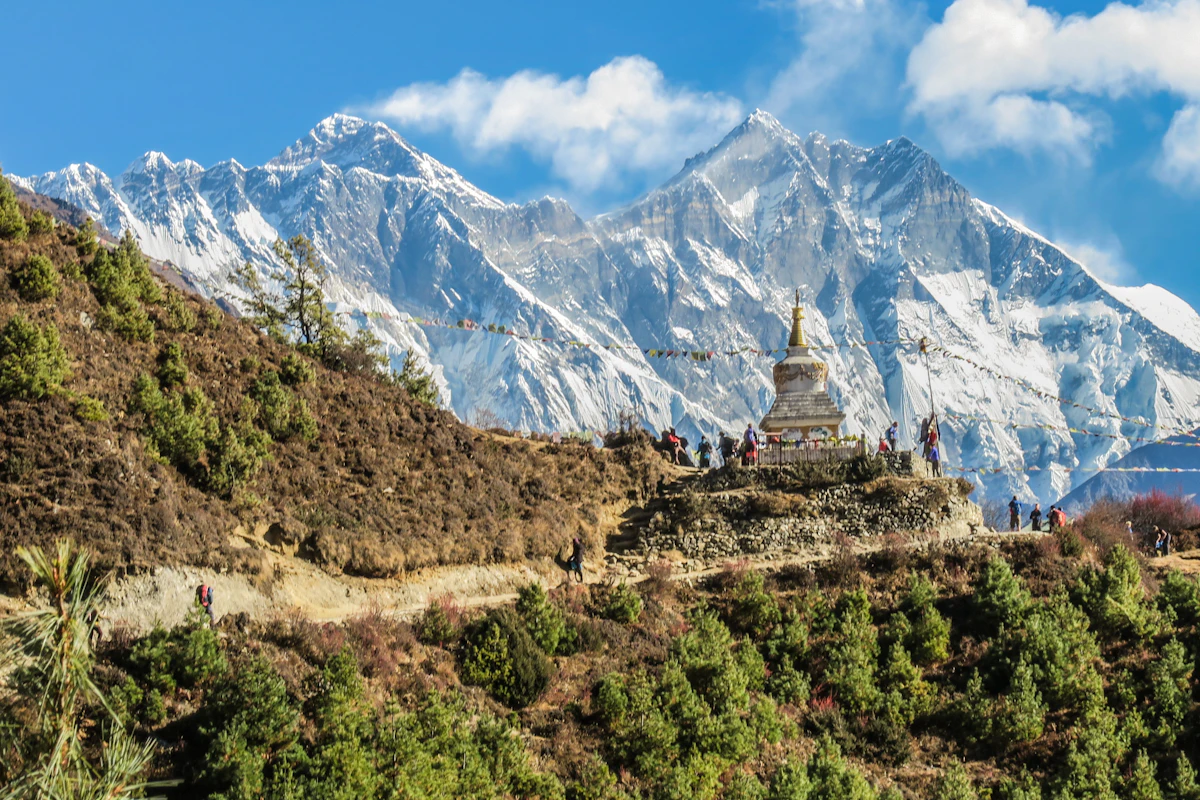
Above the Khumbu Valley, Nepal. TrekTrove Himalaya expedition.
At 5,364 metres, Everest Base Camp is not the summit — but standing there, looking up at the Khumbu Icefall cracking and groaning above you, it feels like the most significant place on earth. The air is thin, the wind relentless, and the silence between gusts is absolute.
This guide is not about getting there. It is about doing it properly.
The route nobody talks about
Most guides begin at Lukla. But the most important part of the Everest Base Camp trek begins the moment you land at Tenzing-Hillary Airport and step into the cold Khumbu air. Your body is already adapting. How you treat it in those first 48 hours determines more about your trek than any piece of gear you carry.
The standard EBC itinerary is 12 to 14 days. We think 14 is the minimum for anyone who values safety over Instagram timing. The extra two days — typically rest days in Namche Bazaar and Dingboche — are not rest at all. They are the days that decide whether your body acclimatises or rebels.
Namche Bazaar: the real start
At 3,440 metres, Namche is where altitude becomes real for most trekkers. The headache on night two is not a warning — it is the process working. Your body is making more red blood cells. Drink water constantly. Sleep when you can. The bakeries and coffee shops are not a luxury; they are part of acclimatisation. Sitting still at altitude, warm and fed, is productive.
From Namche, the route climbs through rhododendron forests that bloom crimson in spring, past the Hillary School in Khumjung, and through a landscape that shifts from pine forest to high alpine scrub to raw rock and ice.
Above Dingboche
Between Dingboche at 4,360m and Lobuche at 4,940m, the trail crosses the lateral moraine of the Khumbu Glacier — a grey, rubble-strewn ridge that offers your first true sense of scale. The peaks here are not pretty in the conventional sense. They are severe. Nuptse's south face drops straight down into shadow. Lhotse fills the horizon with cold authority.
Gorak Shep, the last settlement before Base Camp, sits at 5,164m. Most trekkers sleep poorly here — the altitude, the cold, and the proximity to the goal all conspire against rest. That is normal. A cup of hot lemon, a sleeping bag rated to -20°C, and patience.
Base Camp itself
In expedition season (April to May), Base Camp is a city of yellow tents, fixed ropes, and quiet intensity. Out of season, it is emptier — just wind, glacial moraine, the prayer flags of previous expeditions fraying in the altitude. Both versions are worth experiencing. The silence of the off-season carries its own weight.
The view from Base Camp is not the famous postcard view of Everest. That belongs to Kala Patthar, the 5,644m ridge above Gorak Shep. Most guides include this as a pre-dawn climb. The reward — Everest's pyramid catching the first light of sunrise above the horizon — is one of the few sights in the world that earns every cliché written about it.
What to bring that nobody mentions
A small notebook. Not for journaling (though that too) — for writing down the names of the places you pass through, the people you meet, the altitude readings at each camp. Memory at altitude is unreliable. The notebook becomes the record.
Lip balm with SPF. The combination of altitude UV and cold air destroys lips faster than anything. Bring three.
A buff or thin balaclava for the Khumbu wind above 5,000m. It is not about cold — it is about the wind desiccating everything it touches.
The honest part
Around 30% of trekkers who attempt EBC do not complete it. Most turn back at Dingboche or Lobuche. Not because they lack fitness — but because they underestimate acclimatisation, push too hard on the early days, and arrive at altitude with a deficit they cannot recover from.
The correct response to a persistent headache above 4,000m is descent, rest, and rehydration — in that order. Never ascend with symptoms that do not resolve overnight. This is not caution. It is how the mountain works.
Our guides carry pulse oximeters and supplemental oxygen on every EBC departure. We have turned back three groups in twelve years of operating this route. We consider that a record worth maintaining.
Everest Base Camp is achievable for any trekker with reasonable fitness, the right preparation, and the patience to let acclimatisation happen on its own timeline. The mountain is not going anywhere. Neither should you — rush it.
Tenzing Sherpa
Lead Expedition Guide
Tenzing Sherpa has guided trekking expeditions in the Himalayas for 18 years. They specialize in Buddhist Philosophy and Mustang Cave Exploration routes and high-altitude cultural experiences.


